
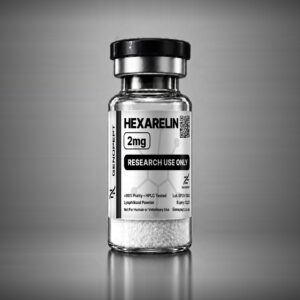
Peptide Bioregulators (Khavinson)
GenoPept’s peptide bioregulators range covers 13 short synthetic peptides from the Khavinson series, including Vilon, Vesugen, Cartalax, Cortagen, Cardiogen, Livagen, Pancragen and Testagen. These two to four amino-acid sequences are studied for tissue-specific regulation of gene expression in preclinical models. Every 20mg vial is lyophilised, batch-identified and verified at 99% purity or higher by HPLC and LC-MS at an independent ISO/IEC 17025 laboratory, with a Certificate of Analysis on each product page.
Researchers can buy peptide bioregulators in the UK with discreet tracked dispatch and free delivery on orders over £200. All products are for in-vitro laboratory research only, not for human use.
Showing all 13 results
About Peptide Bioregulators (Khavinson) at GenoPept
Peptide bioregulators are ultra-short peptides of two, three or four amino acids that originate from the work of Professor Vladimir Khavinson at the St Petersburg Institute of Bioregulation and Gerontology. Each sequence was derived from peptide fractions of a particular organ, then synthesised as a defined molecule. The published hypothesis is that they interact with chromatin in a tissue-specific way and modulate gene expression; research explores this in cell culture and animal ageing models.
GenoPept supplies the range to UK universities, contract research organisations and independent researchers. For background, read our guide to peptide bioregulators (Khavinson). Everything in this category is for in-vitro laboratory research only.
Compounds in this range
Immune, thymus and vascular
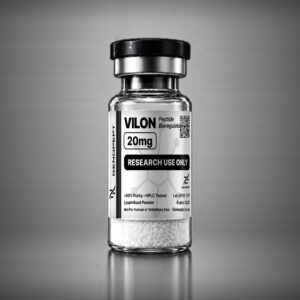
- Vilon (Lys-Glu) 20mg – dipeptide Lys-Glu (KE); studied as a thymic bioregulator in immune and ageing models. Size: 20mg.
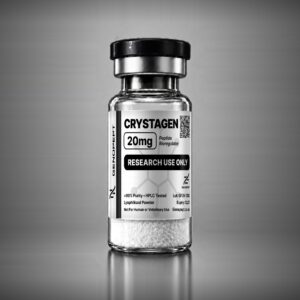
- Crystagen (Glu-Asp-Pro) 20mg – tripeptide Glu-Asp-Pro (EDP); investigated in immune function models. Size: 20mg.
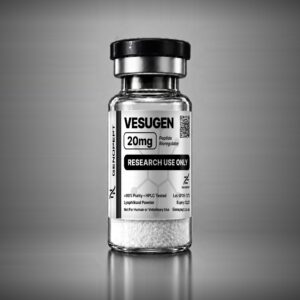
- Vesugen (Lys-Glu-Asp) 20mg – tripeptide Lys-Glu-Asp (KED); studied in vascular endothelium research. Size: 20mg.
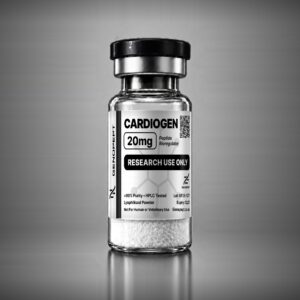
- Cardiogen (Ala-Glu-Asp-Arg) 20mg – tetrapeptide Ala-Glu-Asp-Arg (AEDR); investigated in cardiac tissue models. Size: 20mg.
Brain and nervous system
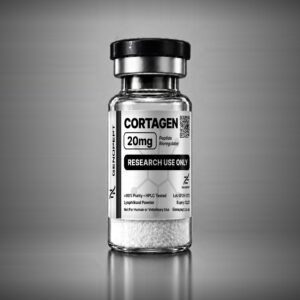
- Cortagen (Ala-Glu-Asp-Pro) 20mg – tetrapeptide Ala-Glu-Asp-Pro (AEDP); studied in cortical neuron and neuroprotection models. Size: 20mg.
Respiratory
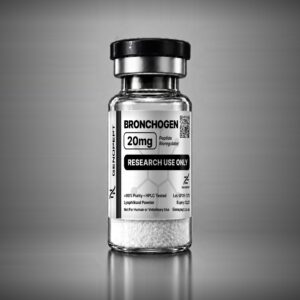
- Bronchogen (Ala-Glu-Asp-Leu) 20mg – tetrapeptide Ala-Glu-Asp-Leu (AEDL); investigated in bronchial epithelium research. Size: 20mg.
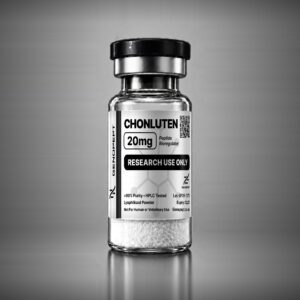
- Chonluten (Glu-Asp-Gly) 20mg – tripeptide Glu-Asp-Gly (EDG); studied in bronchial mucosa models. Size: 20mg.
Liver, pancreas and digestion
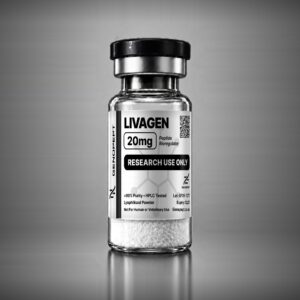
- Livagen (Lys-Glu-Asp-Ala) 20mg – tetrapeptide Lys-Glu-Asp-Ala (KEDA); investigated in hepatocyte models. Size: 20mg.
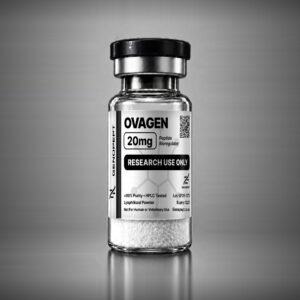
- Ovagen (Glu-Asp-Leu) 20mg – tripeptide Glu-Asp-Leu (EDL); studied in digestive tissue research. Size: 20mg.
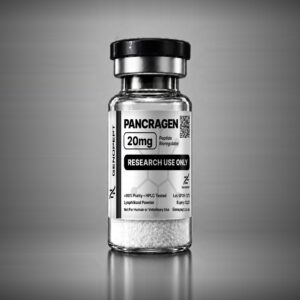
- Pancragen (Lys-Glu-Asp-Trp) 20mg – tetrapeptide Lys-Glu-Asp-Trp (KEDW); investigated in pancreatic islet models. Size: 20mg.
Musculoskeletal and reproductive
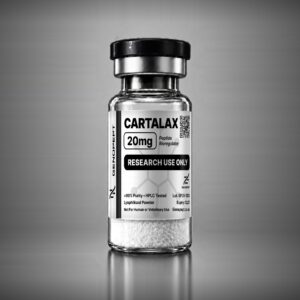
- Cartalax (Ala-Glu-Asp) 20mg – tripeptide Ala-Glu-Asp (AED); studied in chondrocyte and cartilage models. Size: 20mg.
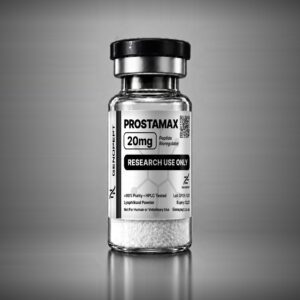
- Prostamax (Lys-Glu-Asp-Pro) 20mg – tetrapeptide Lys-Glu-Asp-Pro (KEDP); investigated in prostate tissue research. Size: 20mg.
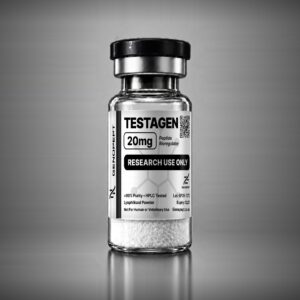
- Testagen (Lys-Glu-Asp-Gly) 20mg – tetrapeptide Lys-Glu-Asp-Gly (KEDG); studied in testicular tissue models. Size: 20mg.
Choosing between bioregulator peptides for research
Selection normally follows the tissue system in the model, since each peptide was derived from a specific organ. Beyond that, the sequences fall into two chemical families. One group is built on a lysyl-glutamyl core: Vilon, Vesugen, Livagen, Pancragen, Prostamax and Testagen. The other starts with alanine or glutamate: Cartalax, Cardiogen, Cortagen, Bronchogen, Chonluten, Ovagen and Crystagen.
Within a family the peptides differ by a single terminal residue, which makes them useful for structure-activity comparisons: Vesugen against Vilon tests what the added aspartate contributes, and Cartalax against Cortagen shows how a fourth residue changes behaviour. All are acidic and water-soluble; only Pancragen carries an aromatic residue, giving a useful UV absorbance for quantification.
| Peptide | Sequence | Length | Tissue focus in research |
|---|---|---|---|
| Vilon | Lys-Glu | 2 AA | Thymus, immune |
| Vesugen | Lys-Glu-Asp | 3 AA | Vascular |
| Cortagen | Ala-Glu-Asp-Pro | 4 AA | Brain cortex |
| Pancragen | Lys-Glu-Asp-Trp | 4 AA | Pancreas |
Purity, testing and Certificates of Analysis
Every GenoPept batch is analysed by Puralytix, an independent ISO/IEC 17025 accredited laboratory. HPLC confirms purity of 99% or higher and LC-MS confirms the measured mass matches the intended di-, tri- or tetrapeptide, a decisive check for sequences this short.
Each product page links its Certificate of Analysis, and all reports are archived in the GenoPept COA library; see what a Certificate of Analysis shows.
Ordering research peptides in the UK
All 13 bioregulators come as 20mg lyophilised vials. Laboratories screening several tissue systems can order bulk boxes of 10 vials and save 20 to 50%. Baskets receive automatic discounts of 5% over £300, 10% over £500 and 15% over £1,000; delivery is free over £200, otherwise tracked Royal Mail Special Delivery is £10. Payment is by bank transfer or cryptocurrency, retail shipping is UK only, and some lines ship on backorder (around 20 days from verified payment).
See also the Epitalon research guide, how to reconstitute research peptides and how to store research peptides.
Peptide Bioregulators (Khavinson) FAQs
What are Khavinson peptide bioregulators?
Khavinson peptide bioregulators are synthetic peptides of two to four amino acids developed at the St Petersburg Institute of Bioregulation and Gerontology. Each is modelled on peptide fractions from a specific tissue and is studied for tissue-specific effects on gene expression in cell culture and animal models. GenoPept supplies 13 of them in 20mg vials for laboratory research only.
What is the difference between Vilon and Vesugen?
Vilon is the dipeptide Lys-Glu (KE), the shortest compound in the range, studied as a thymic bioregulator in immune and cell proliferation models. Vesugen is the tripeptide Lys-Glu-Asp (KED), which adds an aspartate residue and is investigated in vascular endothelium research. They share the lysyl-glutamyl core, so they are often compared directly.
How are GenoPept bioregulator peptides tested?
Each batch is analysed by Puralytix, an independent ISO/IEC 17025 laboratory. HPLC confirms purity of 99% or higher and LC-MS confirms the molecular mass of the peptide, a particularly important check for sequences this short. The batch Certificate of Analysis is linked from every product page and stored in the GenoPept COA library.
How should short bioregulator peptides be stored and reconstituted?
Store unopened lyophilised vials at minus 20 degrees Celsius long term, or 2 to 8 degrees Celsius for short periods, protected from light. Reconstitute by adding bacteriostatic water or sterile diluent down the side of the vial and swirling gently; do not shake. Refrigerate the solution at 2 to 8 degrees Celsius and use it within your protocol's timeframe.
Are peptide bioregulators for human use?
No. Every bioregulator peptide sold by GenoPept is for in-vitro laboratory research only. They are not supplements, not medicines and not for human or veterinary use, diagnosis or therapy. Products are supplied to UK laboratories, universities and researchers who accept the research use only terms at checkout, and no usage information is provided.
Research use only. Every product in this range is for in-vitro laboratory research only: not for human or veterinary use, not a medicine, not for diagnostic or therapeutic use. See our research use only policy.