
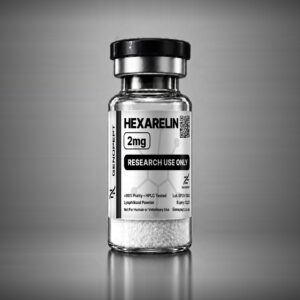
Cosmetic & Skin Research
GenoPept’s cosmetic and skin research peptides range covers the compounds most often studied in dermal biology, pigmentation and extracellular matrix science: GHK-Cu copper peptide, palmitoyl pentapeptide-4, acetyl octapeptide-3, Melanotan 1, Melanotan II, PT-141, hyaluronic acid and the GLOW blend of BPC-157, TB-500 and GHK-Cu. Every vial is lyophilised, batch-identified and verified at 99% purity or higher by HPLC and LC-MS at an independent ISO/IEC 17025 laboratory, with a Certificate of Analysis on each product page.
Researchers can buy cosmetic research peptides in the UK with discreet tracked dispatch and free delivery on orders over £200. All products are for in-vitro laboratory research only, not for human use.
Showing all 10 results
About Cosmetic & Skin Research at GenoPept
The compounds in this category share one research context: the biology of skin, pigment and the extracellular matrix. Signal peptides such as GHK-Cu are investigated for their influence on fibroblast behaviour and collagen gene expression; melanocortin analogues are studied in models of melanogenesis; acetyl octapeptide-3 mimics the SNAP-25 protein. The literature is largely preclinical, drawn from fibroblast cultures, reconstructed skin models and animal wound studies.
GenoPept supplies this range to UK university dermatology groups, contract research organisations and independent researchers, for in-vitro laboratory research only.
Compounds in this range
Signal and matrix peptides
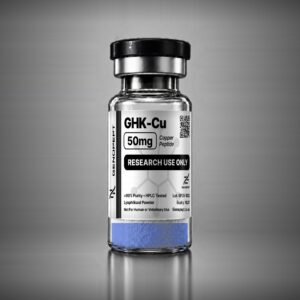
- GHK-Cu (Copper Peptide) – copper(II) complex of the tripeptide Gly-His-Lys; studied for fibroblast signalling and collagen gene expression. Sizes: 50mg, 100mg.
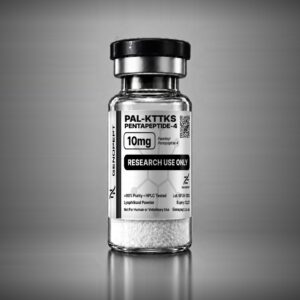
- Palmitoyl Pentapeptide-4 (Pal-KTTKS) 10mg – palmitoylated fragment of type I procollagen (Lys-Thr-Thr-Lys-Ser); a matrikine studied in fibroblast culture. Size: 10mg.
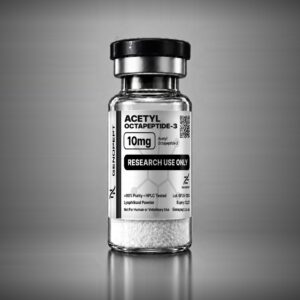
- Acetyl Octapeptide-3 10mg – N-acetylated octapeptide mimicking the SNAP-25 N-terminus; studied in SNARE complex assembly models. Size: 10mg.
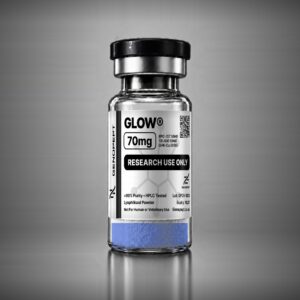
- GLOW Blend (BPC-157 + TB-500 + GHK-Cu) – blend of BPC-157, TB-500 and GHK-Cu (70mg per vial) for co-investigating repair and skin-matrix pathways. Size: 70mg.
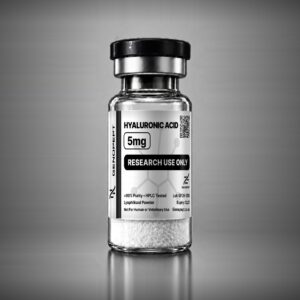
- Hyaluronic Acid 5mg – linear glycosaminoglycan of D-glucuronic acid and N-acetyl-D-glucosamine; a hydration and CD44 receptor reference in matrix research. Size: 5mg.
Melanocortin analogues
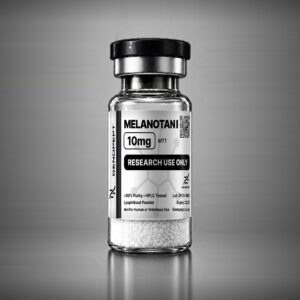
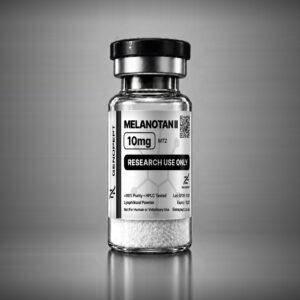
- Melanotan 1 (MT1) 10mg – 13-amino-acid linear alpha-MSH analogue (afamelanotide) with MC1 receptor selectivity; studied in melanogenesis models. Size: 10mg.
- Melanotan II (MT2) – cyclic lactam alpha-MSH analogue active at MC1, MC3, MC4 and MC5 receptors; studied in pigmentation and central melanocortin research. Sizes: 5mg, 10mg.
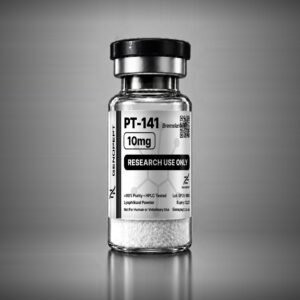
- PT-141 (Bremelanotide) 10mg – cyclic melanocortin heptapeptide (bremelanotide); investigated at MC3 and MC4 receptors in CNS models. Size: 10mg.
Other research compounds
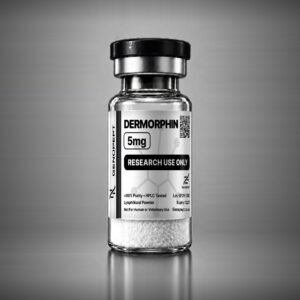
- Dermorphin – amphibian-derived opioid heptapeptide containing D-alanine; a mu-opioid receptor reference ligand in receptor pharmacology. Sizes: 5mg, 10mg.
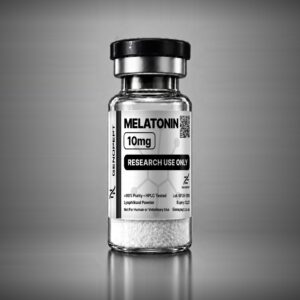
- Melatonin 10mg – indoleamine (N-acetyl-5-methoxytryptamine), not a peptide; studied as an antioxidant and MT1/MT2 ligand in oxidative stress models. Size: 10mg.
Choosing between cosmetic peptides for research
Start with the pathway under study. Laboratories investigating fibroblasts and matrix remodelling usually begin with GHK-Cu, which has the broadest literature, and compare it against palmitoyl pentapeptide-4, a collagen-fragment matrikine. Acetyl octapeptide-3 is studied for interference with SNARE complex formation rather than matrix signalling, so it is not interchangeable with the collagen peptides.
For pigmentation work, Melanotan 1 is linear and relatively MC1R-selective, while Melanotan II and PT-141 are cyclic and also engage MC3 and MC4 receptors, so they appear more often in central nervous system research.
| Compound | Class | Primary target | Typical model systems |
|---|---|---|---|
| GHK-Cu | Copper tripeptide | Fibroblast signalling, copper delivery | Fibroblast culture, wound models |
| Palmitoyl pentapeptide-4 | Lipopeptide, 5 AA | Collagen matrikine signalling | Fibroblast culture, skin equivalents |
| Melanotan 1 | Linear alpha-MSH analogue, 13 AA | MC1 receptor | Melanocyte culture, pigmentation models |
| Melanotan II | Cyclic alpha-MSH analogue | MC1, MC3, MC4, MC5 receptors | Pigmentation and CNS models |
Purity, testing and Certificates of Analysis
Every GenoPept batch is tested by Puralytix, an independent laboratory accredited to ISO/IEC 17025. HPLC establishes purity of 99% or higher and LC-MS confirms the molecular mass matches the expected structure. Each product page links its Certificate of Analysis and every report is archived in the GenoPept COA library; see what a Certificate of Analysis shows.
Ordering research peptides in the UK
Sizes range from 5mg vials up to 100mg for GHK-Cu. Laboratories running repeated assays can order bulk boxes of 10 vials and save 20 to 50%. Baskets receive automatic discounts of 5% over £300, 10% over £500 and 15% over £1,000; delivery is free over £200, otherwise tracked Royal Mail Special Delivery is £10. Payment is by bank transfer or cryptocurrency, retail shipping is UK only, and some lines ship on backorder (around 20 days from verified payment).
Before starting, see the GHK-Cu research guide, how to reconstitute research peptides and how to store research peptides.
Cosmetic & Skin Research FAQs
What are cosmetic and skin research peptides?
Cosmetic and skin research peptides are short amino-acid sequences and related compounds studied in dermal and pigmentation science. The range spans signal peptides such as GHK-Cu, SNAP-25 mimetics such as acetyl octapeptide-3, melanocortin analogues such as Melanotan 1 and matrix molecules such as hyaluronic acid, all supplied for in-vitro laboratory research only.
What is the difference between Melanotan 1 and Melanotan II?
Melanotan 1 (afamelanotide) is a 13-amino-acid linear alpha-MSH analogue that is comparatively selective for the melanocortin-1 receptor linked to melanin synthesis. Melanotan II is a shorter cyclic lactam analogue with broader activity across MC1, MC3, MC4 and MC5 receptors, so the choice depends on whether the model requires MC1R selectivity.
How are GenoPept cosmetic research peptides tested?
Every batch is analysed by Puralytix, an independent ISO/IEC 17025 laboratory, using HPLC to confirm purity of 99% or higher and LC-MS to confirm identity by molecular mass. The batch Certificate of Analysis is linked from each product page and archived in the GenoPept COA library, matched to the lot number on the vial.
How should skin research peptides be stored and reconstituted?
Keep unopened lyophilised vials at minus 20 degrees Celsius long term, or 2 to 8 degrees Celsius short term, protected from light. Reconstitute by adding bacteriostatic water or sterile diluent down the vial wall and swirling gently; never shake. Copper peptides and hyaluronic acid are light and moisture sensitive, so refrigerate solutions promptly.
Are cosmetic peptides from GenoPept for human use?
No. Every compound in the Cosmetic and Skin Research category is sold strictly for in-vitro laboratory research. These products are not cosmetics, not medicines and not intended for topical, injectable or any other human or veterinary application. They are supplied only to UK researchers who accept the research use only terms at checkout.
Research use only. Every product in this range is for in-vitro laboratory research only: not for human or veterinary use, not a medicine, not for diagnostic or therapeutic use. See our research use only policy.